Why your mini split won't turn on in a Nevada winter
Get the mini split repair search off your mind today.
Your mini split heats your house, and in a Nevada winter that matters even with gas backing up the rest of the place. When it won't turn on, you don't have a lot of patience for guessing.
A mini split that stays dead usually comes down to a short list of things. The outdoor unit can freeze up if it's been running in damp cold. The remote or wall control can lose sync with the indoor head. Power to the unit can trip at the breaker without you noticing, especially if something else on the circuit pulled too much. None of these are rare, and none of them mean the system is finished.
Cheap power here means most people don't think twice about running a mini split hard through a cold snap. That's fine for the unit, but it also means a wiring issue or a bad board gets masked for a while before it finally shows up as nothing happening when you hit the button.
Finding someone who actually works on mini splits in Nevada isn't the same as finding any HVAC contractor. These systems are still less common here than central gas furnaces, and a tech who services them through the winter knows the failure points that show up in this climate, not just the ones in a training manual.
Send the request and the search is done. You're matched with one licensed, local contractor who knows this equipment, not a list of companies competing for your callback. No sorting through quotes, no explaining your situation five times over. Someone who already knows what to check shows up knowing it.
A mini split that won't turn on in winter is almost always one of a few things. The outdoor unit has a defrost cycle that kicks in when nights drop near or below freezing, and if ice builds up faster than it can clear, the system can shut itself down rather than run. Check the breaker and the disconnect near the outdoor unit first, since a tripped breaker from an overnight freeze is common and easy to miss. If the remote shows no response at all, the indoor unit's control board or the connection between indoor and outdoor units may have failed. Since most homes in Nevada lean on gas for the bulk of winter heat, a dead mini split might feel like a lesser problem, but if you're using it in specific rooms or to take the edge off cold mornings, losing it still means cold spots gas alone won't fix fast.
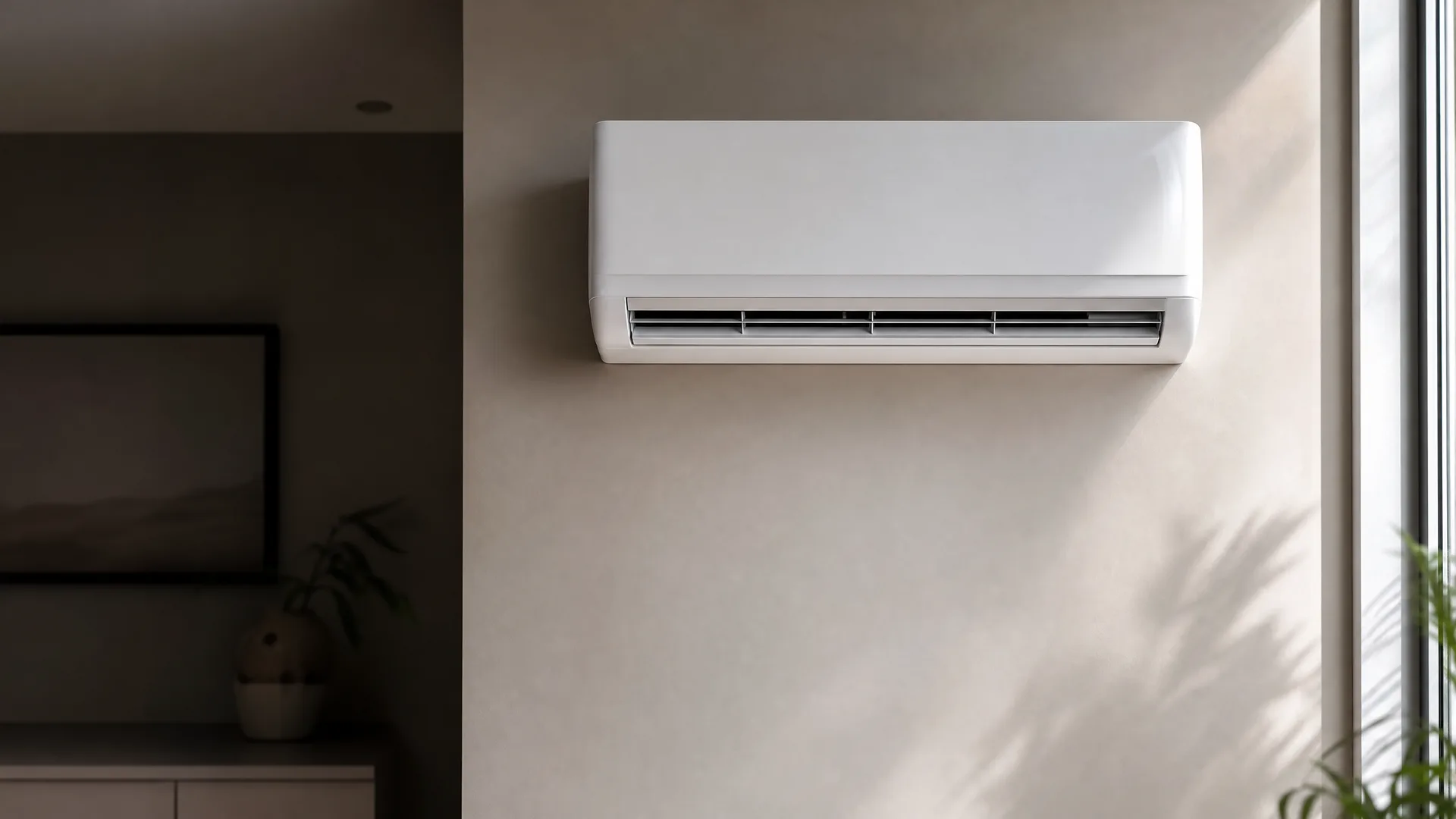
A mini split that fires up clean like this responds to the thermostat right away and runs quiet through the night.
Dust packed into the coil and staining like this on the wall often means the unit has been struggling for a while before it quit.
A mini split is built with safeguards that stop it from running when conditions aren't right, and most of the time that's exactly what's happening on a cold night. A thermistor on the outdoor coil reports the temperature to the control board, and if it reads too cold, the board won't let the compressor start. The indoor head runs its own low-voltage board, and a bad connection there means the remote gets no response even though power is reaching the unit. Some systems simply wait out a hard freeze before they'll fire up at all. Other times the problem sits somewhere else entirely. The reversing valve, which switches the system between heat and cooling, can stick and make the unit look dead. Water from the condensate line can freeze solid, and the float switch built to catch a clogged drain will cut power until that ice clears. Even the outdoor fan matters. If ice or debris keeps it from spinning freely, the system shuts itself down before the compressor gets a chance to run.
What's Happening Inside the Unit
The outdoor unit senses coil temperature with a thermistor, and when that reading drops too low, the board locks out compressor startup to protect it.
A low-voltage control board inside the indoor head runs on 24 volts, and if that board gets a bad signal or no signal, the unit won't respond to the remote at all.
Many mini splits need outdoor temperatures above a certain point to start the compressor, so a hard freeze overnight can leave the system waiting rather than broken.
The reversing valve switches the unit between heating and cooling, and a valve stuck in the wrong position can make the system act like it won't turn on.
Condensate can freeze in the drain line on a cold night, and a float switch tied to that line will cut power to the unit until the blockage is cleared.
The outdoor fan motor has to spin freely to pull air across the coil, and ice or debris jamming that fan will trip a safety shutdown before the compressor ever starts.
This is a mini split doing its job. It kicks on when the thermostat calls for heat and keeps the room steady without you thinking about it. The casing stays clean, the vents stay clear, and nothing about it asks for your attention on a cold evening.
Headed for a no-start
Dust like this on the casing and vents builds up over seasons, not overnight. It cuts airflow across the coil, makes the unit work harder to hit the same temperature, and is often the last thing you notice before the night it just won't start.
Worth Fixing or Done For
Fix it
A frozen outdoor coil that clears once the defrost cycle finishes is a sign the system can still recover on its own.
A tripped breaker or a blown low-voltage fuse on the control board is a quick fix once a tech finds which one failed.
If the indoor head lights up but the outdoor unit stays silent, the problem is often a bad contactor or a wiring fault a tech can trace.
A dirty outdoor coil that's forcing long defrost cycles can be cleaned, which often stops the lockouts from happening again.
A local tech who works on mini splits all winter has usually seen the exact fault code your unit is throwing before.
Replace it
A compressor that won't start even after the capacitor and contactor check out clean usually means the unit itself has failed.
An outdoor unit with a cracked board or corroded wiring from age is often not worth repairing piece by piece.
If the system has been struggling for a while, with weak heat and short cycling before it finally quit, the failure may be the last of several.
A unit that's iced over badly enough to warp the fan blades or housing may have damage beyond the coil itself.
Once a tech opens it up and finds the compressor or board is the issue, replacement is usually the straighter path back to heat.
Clean and responding
This head sits near the window with the coil and vents clear. Air moves through it without resistance, so the thermistor reads the coil accurately and the board starts the compressor when the thermostat calls for heat.
Caked with dust
This unit has grime packed across the top and into the vents. That buildup blocks airflow over the coil, throws off the temperature reading, and can be enough to keep the board from ever starting the compressor.
What are you noticing with your mini split right now
The indoor head might light up when you touch the thermostat, but no air comes out, warm or otherwise. Or nothing lights up at all, no display, no fan, no hum from the outdoor unit. Maybe you hear a click and then silence, like it tried and gave up. Check the outdoor unit too. If the coil is caked in ice or the fan isn't turning, that's worth knowing before anyone shows up. A room that won't heat isn't just uncomfortable on a cold Nevada night. Left alone, pipes in that part of the house are at more risk if temperatures keep dropping and the room has no other heat source.
NOAA's averages put summer dew point in Nevada at 37°F, which is why the outdoor unit never has to work against heavy, moisture-laden air the way it would somewhere humid. A dry coil sheds heat easier and that same coil runs cleaner into winter, with less buildup for the defrost cycle to fight. It doesn't change why a mini split refuses to start on a cold night. The thermistor still reads coil temperature, the board still locks out the compressor if that reading drops too low, and dry air does nothing to stop that. What low dew point does mean is that if your unit won't turn on, summer humidity isn't the reason the coil iced over or the board tripped.
NASA POWER T2MDEW county cells weighted by homes
Before you get your mini split repairAfter you get your mini split repair
1
Thermostat calls for heat and sends a signal to the indoor head
2
Indoor head's control board checks the signal before telling the outdoor unit to start
3
Outdoor unit's thermistor reads the coil temperature before startup is allowed
4
Compressor starts only if the coil temperature clears the board's lockout point
Power costs 13.26 cents per kilowatt-hour statewide
At 13.26 cents a kilowatt-hour, running the compressor to fight through a bad defrost cycle or a stuck board doesn't cost much on its own. The real expense is a mini split that keeps cycling and failing instead of heating your house.
EIA-861 2025 statewide residential average
What tonight comes down to
A mini split that won't start in winter almost always traces back to a frozen outdoor coil, a tripped breaker, a blown low-voltage fuse, or a thermistor reading the board can't trust.
Most of these are recognizable from the symptom alone, which is why a tech who knows mini splits can narrow it down before ever touching the unit.
One licensed local contractor gets matched to your repair, not several companies competing for the same call.
Someone who works on these systems through a Nevada winter has likely already seen whatever your unit is doing tonight.
Clearing the actual cause gets the heat running again instead of leaving the system to keep cycling and failing on its own.
A dead mini split in a Nevada winter is rarely a mystery once someone who knows these systems gets eyes on it. A frozen coil that won't clear, a tripped breaker, a blown low-voltage fuse, a thermistor sending a reading the board won't act on. The symptoms point to the cause before the cover ever comes off. That's the advantage of someone who's spent this winter and the last few doing nothing but this equipment in this climate. They've seen the head that lights up with no air behind it, and they've seen the unit that won't even hum. They know which of those usually means a cleared defrost cycle and which one means a part that needs replacing.
You get matched with one contractor, licensed, local, who takes the call and does the work. Not a handful of companies bidding against each other for your number, just the one who's right for this job. That matters more in winter, when you want someone who already knows what a Nevada cold snap does to an outdoor unit, not someone learning it on your coil.
Once that match is made, the guessing is off your plate. You don't have to figure out if it's the breaker or the board or the ice. Someone whose job is exactly that takes it from here, and your mini split goes back to doing the one thing you need it to do on a cold night: turn on.