Can a mini split be your only heat in Nevada

A white wall-mounted mini-split air conditioner indoor unit shown straight-on against a plain light gray background.
Let a pro reach out

A mini split can heat a Nevada home on its own, and in most of the state's milder stretches of winter it does the job fine. The question is what happens on the coldest nights. Mini splits are heat pumps, and as the outside temperature drops, they have to work harder to pull warmth from the air, so their output falls off right when you need it most. Most homes here were built with gas furnaces, and that gas backup is what carries the house through the few nights a mini split alone would struggle. If yours is the sole source of heat, the honest answer is that it will work for the bulk of the winter and may fall short on the hardest nights, depending on how cold it gets where you live and how the unit was sized for your house.

A dusty, discolored wall-mounted mini-split air conditioner indoor unit on a plain white wall, with its horizontal louvers and vent grille visible.
Before you get your mini split installation
A white wall-mounted mini-split air conditioner on a beige interior wall, next to a window with sheer white curtains and green foliage outside.
After you get your mini split installation

How a mini split handles cold

  • A mini split's outdoor unit pulls heat out of the outside air even when that air is cold, down to a point.
  • Below a certain outdoor temperature, usually somewhere in the single digits or low teens, the compressor can't pull enough heat to keep up with the house.
  • Most mini splits built for cold climates switch to a defrost cycle when frost builds on the outdoor coil, pausing heat output for a few minutes at a time.
  • During defrost the indoor head can blow cool air briefly, which feels like the system failing even though it's working as designed.
  • Gas furnaces don't lose capacity as it gets colder outside, so a furnace paired with a mini split covers the nights the mini split alone can't.
  • Nevada winter nights that drop into the teens or single digits are exactly when a mini split's output falls the most.

A mini split heats by moving warmth from outside air into the house, not by burning anything to create it. That works fine down to a point, because even cold air holds some heat the outdoor unit can pull out. As the temperature keeps dropping, the compressor has to work harder for the same result, and somewhere in the single digits or low teens, it starts losing ground. The house still gets heat, just less of it, right when it needs more. Cold climate mini splits also run a defrost cycle when frost forms on the outdoor coil. The system reverses briefly to melt that frost off, and during those few minutes the indoor head can blow air that feels cool rather than warm. That's normal operation, not a malfunction, but it catches people off guard the first time they notice it. A gas furnace doesn't work this way. It burns fuel to make heat, so the coldest night of the year costs it nothing in capacity. Paired together, the furnace picks up exactly where the mini split's output starts to fall off, which in Nevada means the nights that drop into the teens or lower. The mini split still does most of the work most of the winter. The furnace is there for the hours when outdoor air stops giving up enough heat to pull from.


A smiling man in a dark navy sweater sits on a light sofa in a living room, with a glass bowl of popcorn on a wooden coffee table and bookshelves behind him.
A smiling man in a dark green sweater sits on a tan leather sofa in a dimly lit living room, with a bowl of popcorn in the foreground and a kitchen area blurred behind him.
A smiling middle-aged man in a dark shirt sits on a gray sofa in a living room, with a bowl of popcorn on a side table and shelves, a window and kitchen area behind him.
A smiling bearded man in a dark gray t-shirt sits on a gray couch in a living room, with a large glass bowl of popcorn on a wooden table in the foreground.

Why most of Nevada works fine

Reno sees plenty of cold nights, but Las Vegas and the southern part of the state rarely drop into the range where a mini split struggles. Even up north, a lot of winter mornings sit well above single digits. A mini split sized right for your home will cover most of those days without help. The nights that give it trouble are the exception, not the rule, and in the desert valleys they barely come up at all.

Why gas backup still makes sense

Most homes in Nevada already heat with gas, and that furnace doesn't disappear once a mini split goes in. On the handful of nights each winter when the temperature really drops, the furnace can carry the load while the mini split handles everything else. Power here is cheap, so running the mini split most of the season costs little, and the furnace sits ready for the few nights it's actually needed. You get the efficiency without betting the whole winter on one machine.

A woman with dark hair in a bun reclines on a sofa with her eyes closed, wrapped in a cream fleece blanket, a closed blue hardcover book resting in front of her, with a lit lamp and a vase of dried flowers in the background.
A smiling bearded man in a navy sweater sits at a candlelit dinner table with a glass of red wine, a bowl of salad, and plates of food in the foreground.
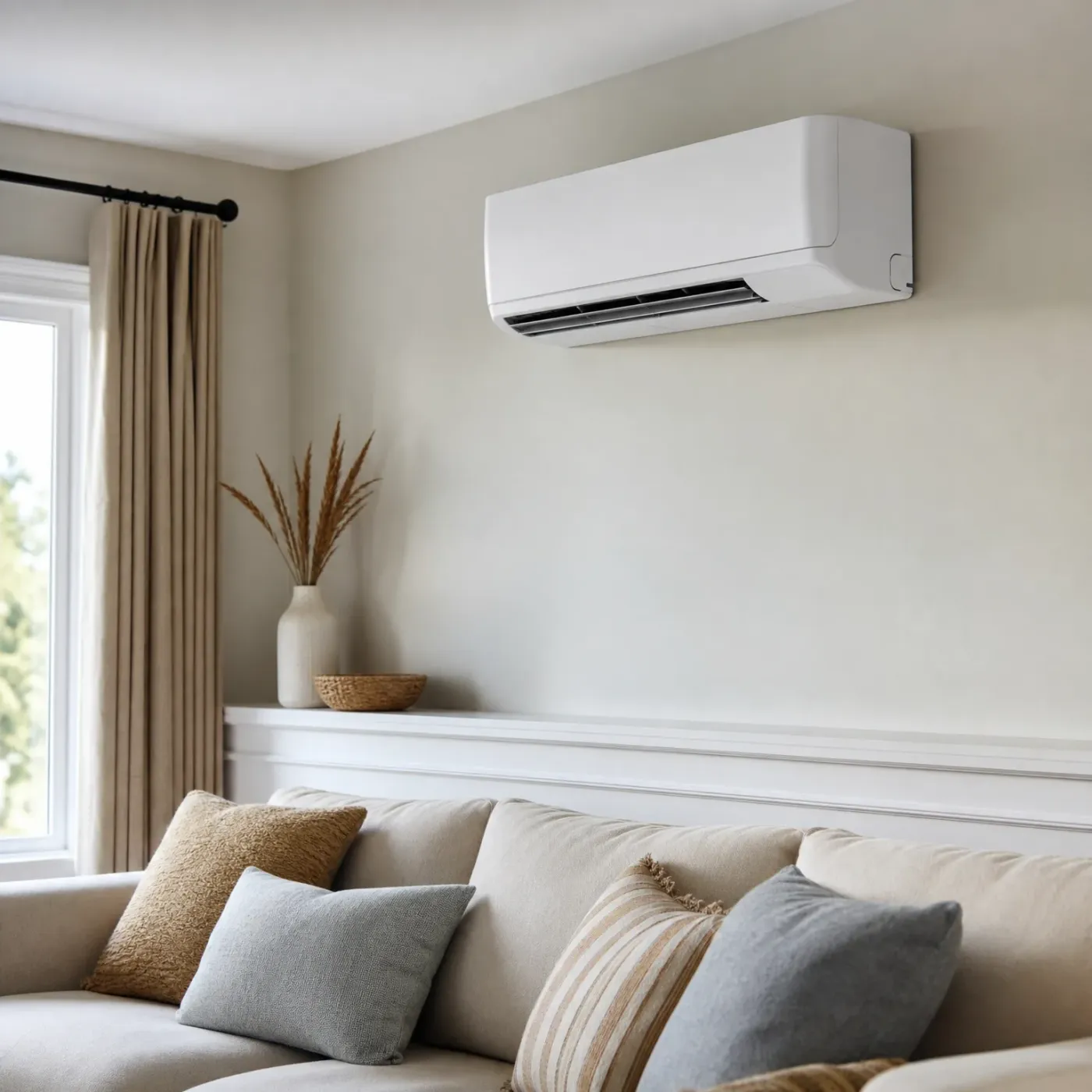
A white wall-mounted mini-split air conditioner on a pale wall above a beige sofa with assorted cushions, beside a window with long curtains and a shelf holding a vase of dried grasses and a woven bowl.

Finding a pro stops being your job

Skip collecting and comparing quotes for the new mini split.

One request and the search for a pro is handled.

I'm done searching

You're not committing to anything by asking.

Is your house actually keeping up on the cold mornings

You'll notice it first at the far end of the house, the room farthest from the indoor unit staying a few degrees cooler than the rest. On the coldest mornings the air coming out of the unit feels cooler than it did in October, and the system runs longer to hold the same temperature. If your home still has its gas furnace or wall heater, you might already be flipping to that when it's below freezing outside. That's normal, and it's not a sign anything is broken. What matters is whether you're relying on a backup you don't want to keep using, or whether the mini split was sized with those cold mornings in mind to begin with.

A white wall-mounted mini-split indoor unit installed high on a gray interior wall, with a sofa, dark table and window visible in an adjoining room to the right.

Running clean, keeping up

A mini split that's sized right and kept clean heats the room evenly on a cold morning. Air moving out of the unit feels warm at the vent, and the sofa and coffee table ten feet away don't know the difference.

A wall-mounted mini-split air conditioner indoor unit with a dusty beige casing and dark louvered vent, installed near the ceiling on a plain beige wall.

A unit that's falling behind

Yellowing on the casing and dust built up on the louvers usually means the filter hasn't been cleaned in a while. A dirty unit works harder to move the same amount of heat, and on the coldest nights that's exactly when it can't keep up.

Mini split alone or with gas backup

Mini split alone

  • On a January morning in Reno in the single digits, the compressor is working near its limit and still losing ground to heat loss through the walls.
  • You'll feel it as a room that never quite reaches the temperature on the thermostat, usually the one farthest from the indoor unit.
  • Down south in Las Vegas, where winter mornings rarely dip that low, a mini split alone keeps the house even without much strain.
  • Running the unit hard on those cold mornings pushes the compressor and the electric bill up without a backup source to share the load.
  • No gas line, no furnace to maintain, just the one system to keep clean and serviced.

Mini split with gas backup

  • Most homes in Nevada already have a gas furnace, so pairing it with the mini split means the furnace only has to carry the coldest mornings.
  • On those sub-freezing nights in Reno, the furnace picks up the load the compressor can't, and the house stays even room to room.
  • The mini split keeps doing most of the heating through the milder stretches, since power here is cheap and the furnace sits idle until it's needed.
  • You get two systems to maintain instead of one, which means two service calls instead of one when something needs attention.
  • In Las Vegas, where cold mornings are rare, the furnace might go whole winters without running at all.
A two-story gray horizontal-siding house with multiple gables, a covered front porch with white columns and railing, and a dark front door, fronted by a patchy green and brown lawn under a clear blue sky.

Summer air here sits at a dew point of 37°F on average across June, July and August, which is dry. That dryness is what makes a mini split's cooling feel so effective, the indoor unit isn't fighting humidity, just heat. But it also means the outdoor unit is working against intense heat with little moisture to help carry it away. In Las Vegas and the rest of the southern desert, that heat is the bigger test for a mini split than winter cold ever is. A unit sized for your home should still keep rooms even on the hottest afternoons. Source: regional climate averages for Nevada.

NASA POWER T2MDEW county cells weighted by homes

A white wall-mounted mini-split air conditioner unit high on a light gray interior wall, with a beige curtain and window at the left and wood-look flooring below.
Clean coils, clear filter, and the unit keeps pace with a cold Reno morning without straining.
A dusty white wall-mounted mini-split air conditioner indoor unit with open louvers, installed near the ceiling on a plain light-colored wall.
Dust and grime on the coil make the unit work harder and still fall short on the coldest nights.

Power costs 13.26 cents per kilowatt-hour statewide

At 13.26 cents a kilowatt-hour, running a mini split hard on the coldest nights doesn't hit your bill the way it would somewhere with pricier power. Most Nevada homes heat with gas, so a mini split running as backup or as the main source costs less to lean on here than it would elsewhere.

EIA-861 2025 statewide residential average

  1. The outdoor unit draws heat energy out of cold outside air

  2. Refrigerant inside the coil absorbs that heat and turns to gas

  3. The compressor squeezes the gas, raising its temperature further

  4. The indoor unit's coil releases that heat into the room air

A closed laptop and a cream mug of coffee on a coaster sit on a dark wooden table, with a potted plant at left and a kitchen counter, tiled backsplash and shelf of ceramics in the background.

So can a mini split heat your Nevada home on its own

In most of the state, yes. In Las Vegas and the southern valleys, a mini split can carry the whole winter without help. In Reno and the colder pockets of the north, it depends on sizing and on what your coldest mornings actually look like. A unit that's sized for your house and kept clean will get you through January. One that's undersized or dirty will leave you reaching for a space heater by February.

If you're still not sure where your house lands, that's not something you have to work out alone. You'd otherwise be the one calling around, explaining your house and your current setup to one contractor after another, and sitting with a stack of quotes trying to tell which one actually fits what you need. Send the form once and that part is off your plate. A contractor who installs mini splits in your part of Nevada can look at your home and tell you straight whether it'll heat you through the winter alone, or whether it should run alongside what you've already got.

A living room corner with a light beige sofa holding a textured taupe cushion, a large ceramic vase of olive branches by a window, a framed neutral artwork on the wall, and a dark bowl with stacked books in the foreground.
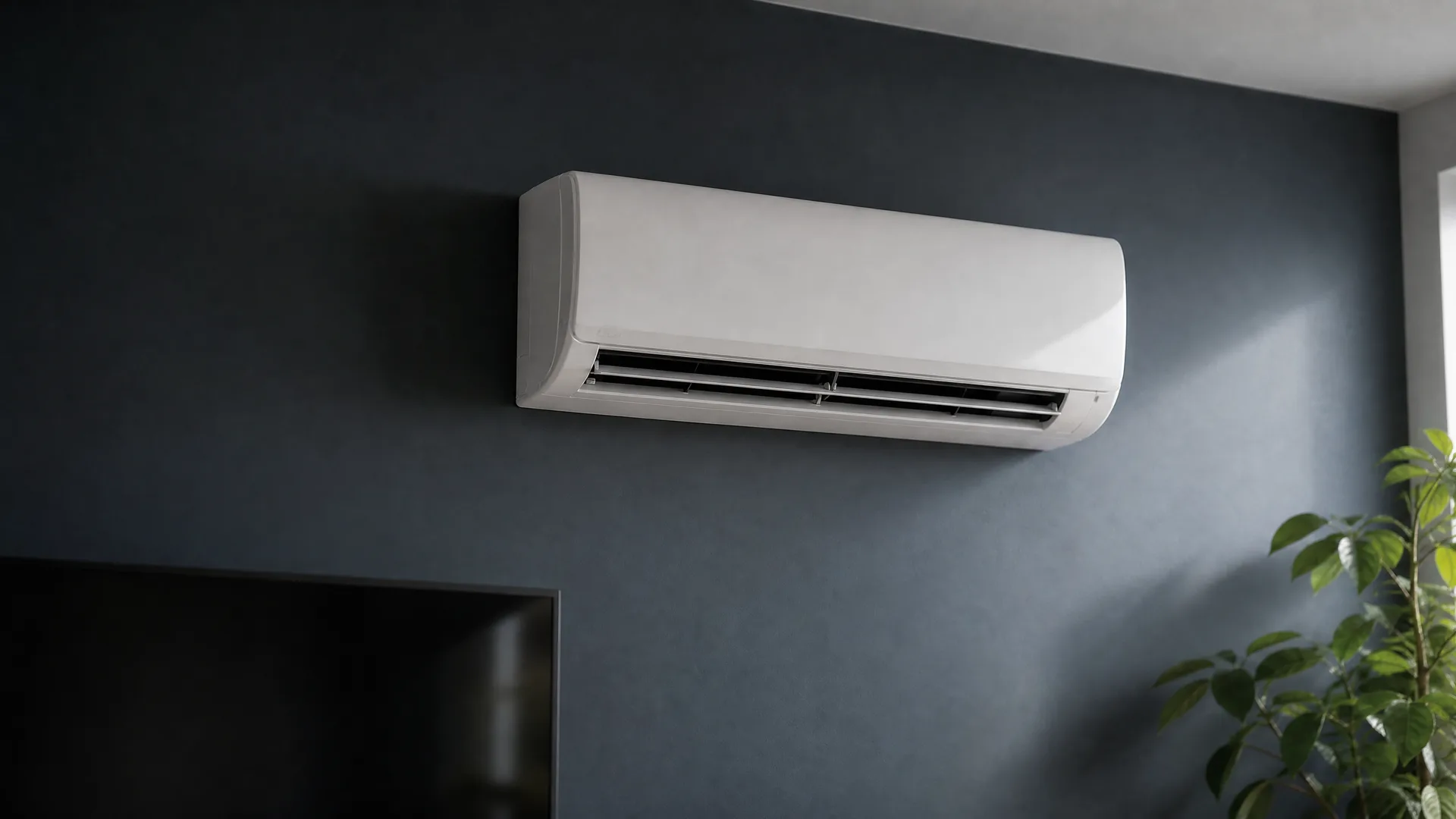
A white wall-mounted mini-split air conditioner on a dark gray interior wall, with a flat screen at lower left and a green leafy plant at lower right.

Let someone else find the pro

Step 1 of 3: Equipment