Running the way it should
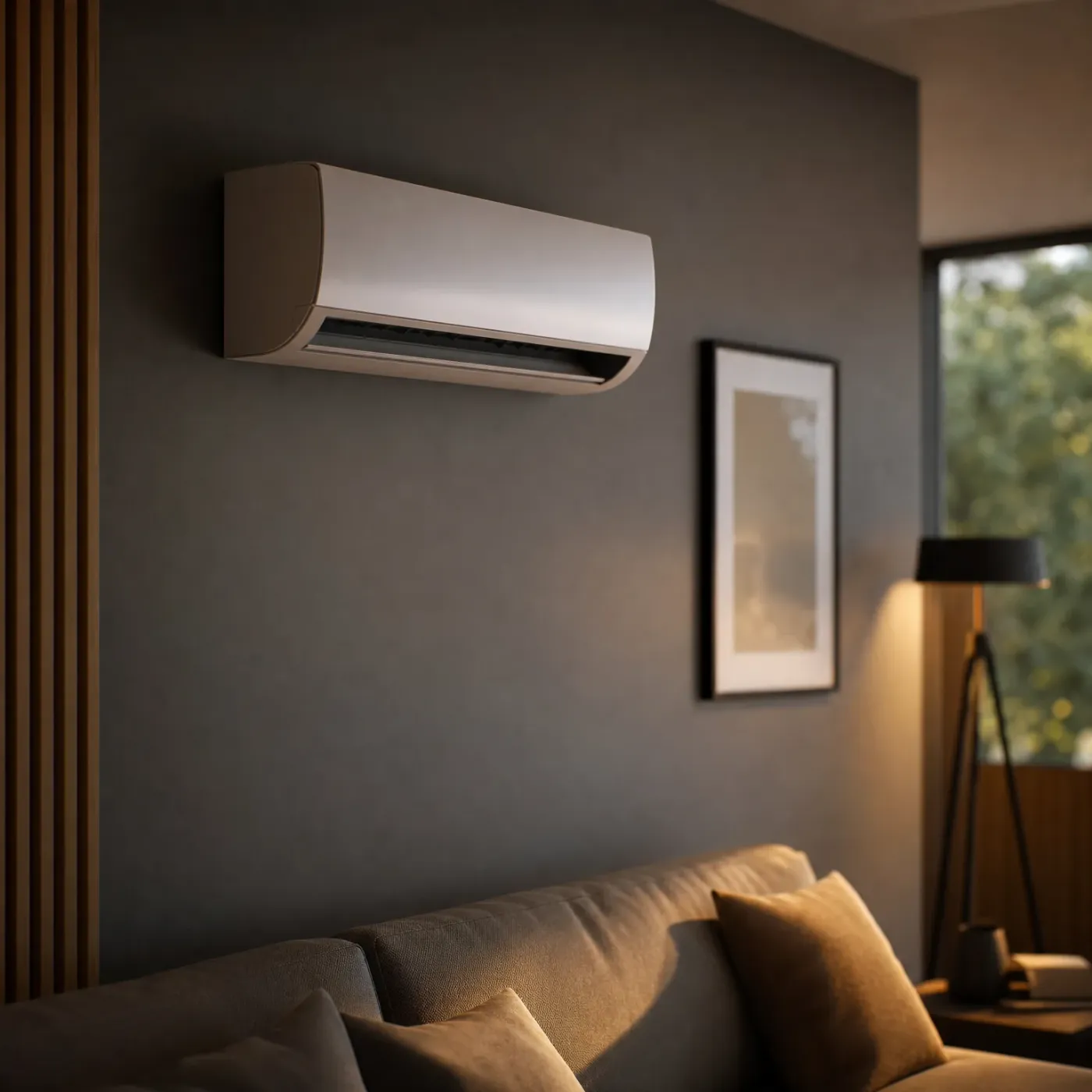
A mini split like this holds heat mode and a steady set point without complaint. The grille stays clean, the panel closed, and it moves warm air quietly into the room all winter without you thinking about it.
Matched to your mini split job
Set it right and a mini split will keep a Nevada home warm for less than gas, but the number on the thermostat isn't the whole story. This page gets into the setting itself, the mode it should run in, and what to check so it isn't working harder than it needs to. If the unit needs a look before winter, you can skip the search for who does that and get matched with someone who takes it from here.
Find my proSet your mini split to heat mode and a target between 68 and 70 degrees, then leave it alone. A heat pump works best running steady rather than cycling on and off, because every restart asks the compressor to work harder than it would holding a temperature. Nevada winters are mild compared to what the unit was built to handle, so it rarely has to run flat out, which is part of why it costs less than a gas furnace to operate here. If you're used to a furnace thermostat, resist the urge to crank it higher when a room feels cool. A mini split heats slower and steadier than gas heat, and pushing the set point up doesn't speed that up, it just makes the system work harder than it needs to. Check the outdoor unit once in a while. If the coil ices over and the unit isn't running a defrost cycle on its own, that's worth having looked at.

A mini split like this holds heat mode and a steady set point without complaint. The grille stays clean, the panel closed, and it moves warm air quietly into the room all winter without you thinking about it.

Dust and discoloration like this build up over years of use when the filter and coil never get checked. The unit still runs, but it pulls more power to put out the same heat, and that shows up on the bill before it shows up as a breakdown.


A mini split moves heat instead of making it, so it can put out more heat energy than the electricity it uses to run. That's why it costs less to hold a room at 68 than a gas furnace does.
Gas is still common here, but if your mini split handles the bulk of the heating, that's less gas burned and less draw on a furnace that only has to cover the coldest nights.




The same filter that choked with dust all summer is still in there. A clogged filter makes the unit run longer to hit 68, and that shows up on your power bill.
A mini split that's straining to heat the house now will be the same one straining to cool it this summer. Catching it in winter means it's not a surprise on the first hot day.

A mini split pulls heat out of outside air even when that air feels too cold to hold any. Below a certain point, usually around freezing, frost starts forming on the outdoor coil. The unit knows this and runs a defrost cycle: it reverses itself for a few minutes, blows warm refrigerant through the outdoor coil to melt the frost, and sends a little cool air inside while it does. That's normal. If you see the outdoor fan stop and steam rise off the unit on a cold morning, it's defrosting, not failing.
What isn't normal is ice that doesn't clear, or a defrost cycle that runs every few minutes instead of every hour or two. That usually points to a refrigerant charge that's off or a sensor reading wrong, and it's not something to diagnose by watching it from the window. If your unit is doing that, the next useful step is having someone who works on these systems look at the actual readings, not guess from the symptoms. Getting matched with a contractor who services mini splits in your area means you describe it once and someone qualified calls you back, instead of working down a list of HVAC companies yourself.

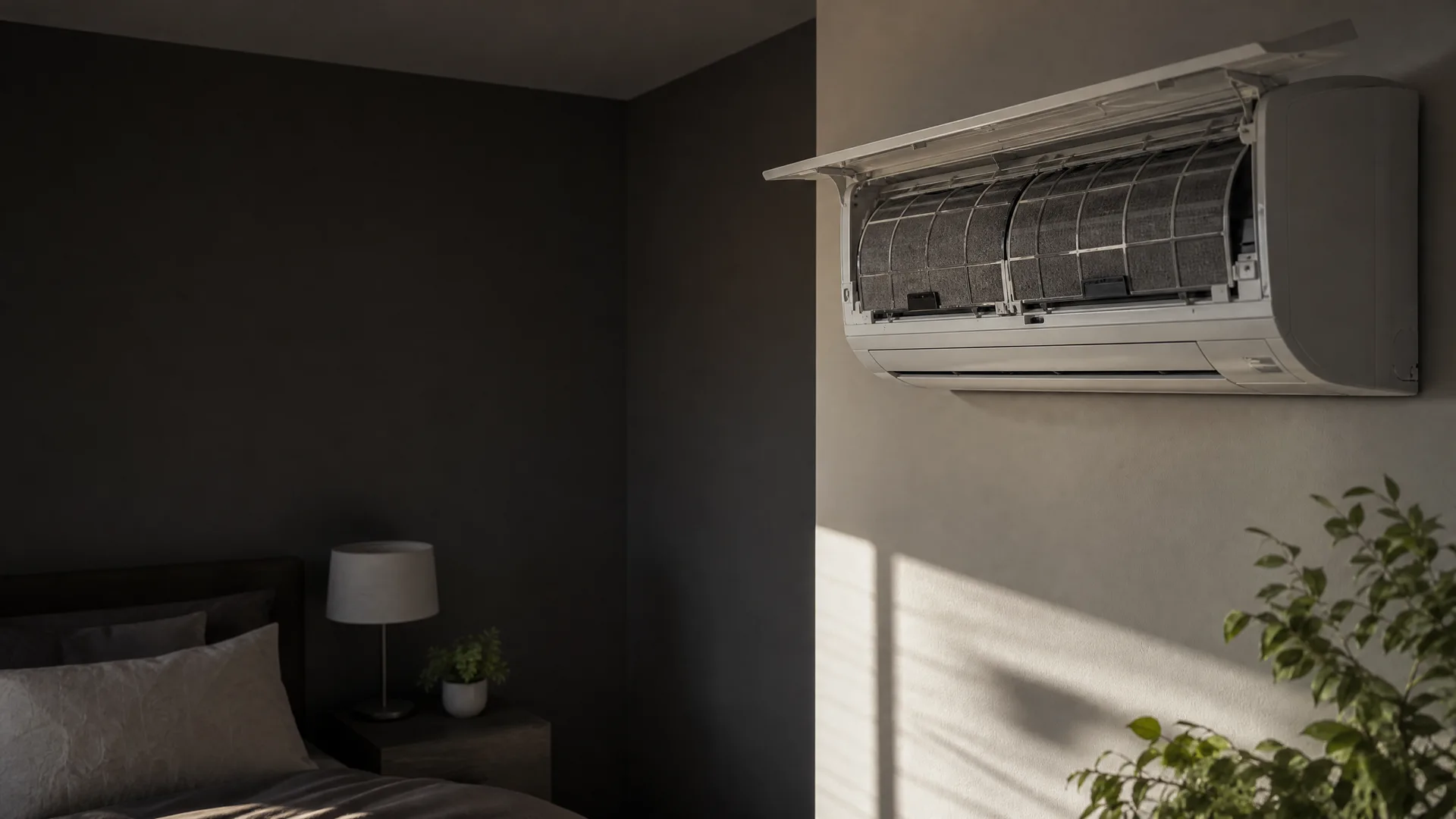
The cover is tilted up against the wall and the filter sits on the dresser, grey all the way across with a winter's worth of dust. Morning light is coming in flat over the blinds. You'd gone in to bump the temperature up two degrees and noticed the unit running longer than it should to get there, so you pulled the panel to look. No sense calling around for this one, comparing names and waiting on callbacks just to hear the same five minutes of advice twice. Someone local takes one look at the coil behind the screen and knows already what the rest of the morning holds.
Skip searching for a mini split pro and answer a few questions instead.
There's no charge for the request.
You can set the mini split to 68 and let it run all winter without touching it again. The thermostat does what it's told. It holds 68 whether the coil behind the panel is clean or packed with dust, whether the outdoor unit is draining properly or icing up at the base, whether the filter is pulling air through easily or fighting for every bit of it. The number on the wall tells you the room is warm. It doesn't tell you what the unit went through to get there, or what it's costing you in power to hold that number when something inside isn't right.
A technician who services the unit once a year looks at what you can't see from the thermostat. They check the coil, the drain, the refrigerant charge, the electrical connections, things that drift out of spec slowly enough that the unit still heats the room while working harder than it should. Catching that early means you're not the one who finds out at 10 degrees that the outdoor unit can't keep up. It also means you're not the one calling around for someone to come look at it, explaining the same problem twice, comparing quotes while the house sits cold. A contractor who already knows the unit handles the yearly check and whatever it turns up.
At 13.26 cents a kilowatt-hour, holding your mini split at 68 instead of 72 is real money back in your pocket every month, all winter. A dirty filter or a frosted coil makes the unit draw more watts to hit that number, so the rate you're paying only stays low if the unit is running clean.
EIA-861 2025 statewide residential average
Heat mode, 68 to 70 degrees, left alone. That's the whole setting. A mini split is built to hold a temperature, not chase one, and every time you bump it up or down for a few hours the compressor has to restart and work harder than it would just sitting at 68 all day. The unit doesn't care if it's 20 degrees outside or 40. It pulls heat out of the outside air either way, and below freezing you'll see frost build up on the outdoor coil. That's the unit defrosting itself, not a sign anything's wrong, and it clears on its own. What does change the number on your power bill is what's happening inside the unit while it runs. A filter that's still dirty from summer makes it work longer to hit the same 68. A coil that stays frosted too long because something's off does the same thing. Neither of those is something the thermostat can fix for you. Most homes here still lean on gas to carry the winter, and that's fine. A mini split doesn't need to replace the furnace to save you money. Run it in heat mode, hold it steady, keep the filter clean, and let it take the part of the load it's suited for. It'll sit there quietly doing that all winter, and the only way you'll notice is a power bill that stays where it should.


Get the right pro for your mini split
One form replaces the calls you'd make to find a mini split pro.

